
Articles

Doc Holliday
John Henry Holliday (August 14, 1851 – November 8, 1887), better known as Doc Holliday, was an American dentist, gambler, and gunfighter who was a close friend and associate of lawman Wyatt Earp. Holliday is best known for his role in the events surrounding and his participation in the gunfight at the O.K. Corral in Tombstone, Arizona.

Pike Expedition
The Pike Expedition (July 15, 1806 – July 1, 1807) was a military party sent out by President Thomas Jefferson and authorized by the United States government to explore the south and west of the recent Louisiana Purchase. It was led by United States Army Lieutenant Zebulon Pike, Jr. who was promoted to captain during the trip.
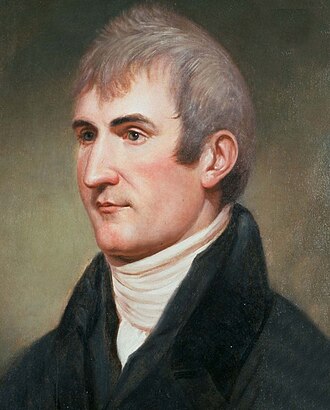
Meriwether Lewis
Meriwether Lewis (August 18, 1774 – October 11, 1809) was an American explorer, soldier, politician, and public administrator, best known for his role as the leader of the Lewis and Clark Expedition, also known as the Corps of Discovery, with William Clark.

Treaty of Guadalupe Hidalgo
The Treaty of Guadalupe Hidalgo officially ended the Mexican–American War (1846–1848). It was signed on the 2nd of February 1848 in the town of Guadalupe Hidalgo. After the defeat of its army and the fall of the capital in September 1847, Mexico entered into peace negotiations with the U.S. envoy, Nicholas Trist.
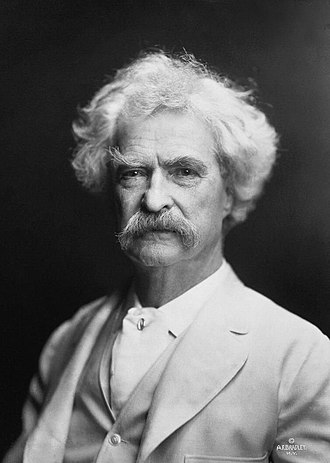
Mark Twain
Samuel Langhorne Clemens (November 30, 1835 – April 21, 1910), known by the pen name Mark Twain, was an American writer, humorist, and essayist. He has been praised as the "greatest humorist the United States has produced", with William Faulkner calling him "the father of American literature".

Daniel Boone
Daniel Boone (November 2 [O.S. October 22] 1734 – September 26, 1820) was an American pioneer and frontiersman whose exploits made him one of the first folk heroes of the United States. He became famous for his exploration and settlement of Kentucky, which was then beyond the western borders of the Thirteen Colonies.

Pony Express
The Pony Express was an American express mail service that used relays of horse-mounted riders between Missouri and California. It was operated by the Central Overland California and Pikes Peak Express Company.

First transcontinental railroad
America's first transcontinental railroad (known originally as the "Pacific Railroad" and later as the "Overland Route") was a 1,911-mile (3,075 km) continuous railroad line built between 1863 and 1869 that connected the existing eastern U.S.
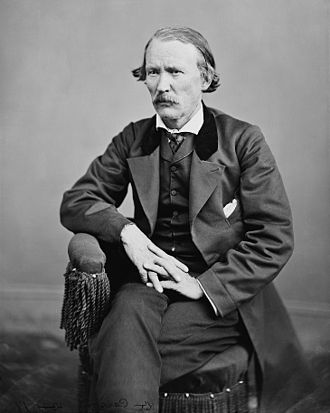
Kit Carson
Christopher Houston Carson (December 24, 1809 – May 23, 1868), popularly known as Kit Carson, was an American frontiersman, fur trapper, wilderness guide, Indian agent and U.S. Army officer. Carson left home in rural Missouri at 16 to become a mountain man and trapper in the West.

Open range
In the Western United States and Canada, open range is rangeland where cattle roam freely regardless of land ownership. Where there are "open range" laws, those wanting to keep animals off their property must erect a fence to keep animals out; this applies to public roads as well.

Territorial evolution of the United States
The United States of America was formed after thirteen British colonies in North America declared independence from the British Empire on July 4, 1776. In the Lee Resolution, passed by the Second Continental Congress two days prior, the colonies resolved that they were free and independent states.

Bozeman Trail
The Bozeman Trail was an overland route in the Western United States, connecting the gold rush territory of southern Montana to the Oregon Trail in eastern Wyoming. Its important period was from 1863 to 1868. While the major part of the route used by Bozeman Trail travelers in 1864 was pioneered by Allen Hurlbut, it was named after John Bozeman.