
Articles

Gold panning
Gold panning, or simply panning, is a form of placer mining and traditional mining that extracts gold from a placer deposit using a pan. The process is one of the simplest ways to extract gold, and is popular with geology enthusiasts especially because of its low cost and relative simplicity.
Apache
The Apache ( ə-PATCH-ee) are several Southern Athabaskan language-speaking peoples of the Southwest, the Southern Plains and Northern Mexico. They are linguistically related to the Navajo. They migrated from the Athabascan homelands in the north into the Southwest between 1000 and 1500 CE.

Hydraulic mining
Hydraulic mining is a form of mining that uses high-pressure jets of water to dislodge rock material or move sediment. In the placer mining of gold or tin, the resulting water-sediment slurry is directed through sluice boxes to remove the gold or tin. It is also used in mining kaolin and coal.

Placer mining
Placer mining () is the mining of stream bed deposits for minerals. This may be done by open-pit mining or by various surface excavating equipment or tunneling equipment.
Gold rush
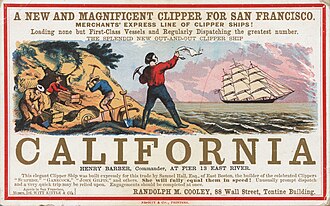
A gold rush or gold fever is a discovery of gold—sometimes accompanied by other precious metals and rare-earth minerals—that brings an onrush of miners seeking their fortune.

Sioux
The Sioux or Oceti Sakowin (, SOO; Dakota/Lakota: Očhéthi Šakówiŋ [oˈtʃʰeːtʰi ʃaˈkoːwĩ]) are groups of Native American tribes and First Nations people from the Great Plains of North America. The Sioux have two major linguistic divisions: the Dakota and Lakota peoples (translation: 'friend, ally' referring to the alliances between the bands).

Cherokee
The Cherokee ( CHAIR-ə-kee, CHAIR-ə-KEE; Cherokee: ᎠᏂᏴᏫᏯᎢ, romanized: Aniyvwiyaʔi / Anigiduwagi, or ᏣᎳᎩ, Tsalagi) people are one of the Indigenous peoples of the Southeastern Woodlands of the United States.

Sutter's Mill
Sutter's Mill was a water-powered sawmill on the bank of the South Fork American River in the foothills of the Sierra Nevada in California. It was named after its owner John Sutter. A worker constructing the mill, James W. Marshall, found gold there in 1848.

Native Americans in the United States
Native Americans (also called Indians, American Indians, First Americans, and Indigenous Americans) are the Indigenous peoples of the United States, particularly of the lower 48 states and Alaska. They may also include any Americans whose origins lie in any of the Indigenous peoples of North or South America.

Black Hills gold rush
The Black Hills gold rush took place in Dakota Territory in the United States. It began in 1874 following the Custer Expedition and reached a peak in 1876–77. Rumors and poorly documented reports of gold in the Black Hills go back to the early 19th century.

Circuit rider (religious)
Circuit riders, also known as horse preachers, were clergy assigned to travel around specific geographic territories to minister to settlers and organize congregations.

Colorado Silver Boom
The Colorado Silver Boom was a dramatic expansionist period of silver mining activity in the U.S. state of Colorado in the late 19th century. The boom started in 1879 with the discovery of silver at Leadville.