
Mining
Articles
Anaconda Copper
The Anaconda Company, also known historically as the Anaconda Gold and Silver Mining Company (1881–1891), Anaconda Mining Company (1891–1895), Anaconda Copper Mining Company (1895–1899), Amalgamated Copper Company (1899–1915), and Anaconda Copper Company (1915–1955), was an American mining company headquartered in Butte, Montana.

Black Hills gold rush
The Black Hills gold rush took place in Dakota Territory in the United States. It began in 1874 following the Custer Expedition and reached a peak in 1876–77. Rumors and poorly documented reports of gold in the Black Hills go back to the early 19th century.

California gold rush
The California gold rush (1848–1855) was a gold rush in California, which began on January 24, 1848, when gold was found by James W. Marshall at Sutter's Mill in Coloma, California. The news of gold brought approximately 300,000 people from the rest of the United States and abroad to California, which had recently been conquered from Mexico.

Cariboo Gold Rush
The Cariboo Gold Rush was a gold rush in the Colony of British Columbia, which later became the Canadian province of British Columbia. The first gold discovery was made at Hills Bar in 1858, followed by more strikes in 1859 on the Horsefly River, and on Keithley Creek and Antler Creek in 1860.

Colorado Silver Boom
The Colorado Silver Boom was a dramatic expansionist period of silver mining activity in the U.S. state of Colorado in the late 19th century. The boom started in 1879 with the discovery of silver at Leadville.

Comstock Lode
The Comstock Lode is a lode of silver ore located under the eastern slope of Mount Davidson, a peak in the Virginia Range in Virginia City, Nevada (then western Utah Territory), which was the first major discovery of silver ore in the United States and named after Canadian miner Henry Comstock.
Cripple Creek Gold Rush
The Cripple Creek Gold Rush was a period of gold production in the Cripple Creek area from the late 1800s until the early 1900s. Mining exchanges were in Cripple Creek, Colorado Springs, Pueblo and Victor. Smelting was in Gillett, Florence, and (Old) Colorado City.

Fraser Canyon Gold Rush
The Fraser Canyon Gold Rush (also Fraser Gold Rush and Fraser River Gold Rush) began in 1858 after gold was discovered on the Thompson River in British Columbia at its confluence with the Nicoamen River a few miles upstream from the Thompson's confluence with the Fraser River at present-day Lytton.

General Mining Act of 1872
The General Mining Act of 1872 is a United States federal law that authorizes and governs prospecting and mining for economic minerals, such as gold, platinum, and silver, on federal public lands.

Gold panning
Gold panning, or simply panning, is a form of placer mining and traditional mining that extracts gold from a placer deposit using a pan. The process is one of the simplest ways to extract gold, and is popular with geology enthusiasts especially because of its low cost and relative simplicity.
Gold rush
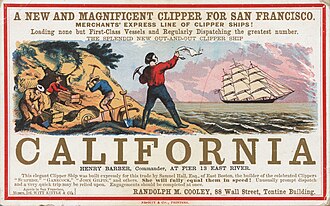
A gold rush or gold fever is a discovery of gold—sometimes accompanied by other precious metals and rare-earth minerals—that brings an onrush of miners seeking their fortune.

Homestake Mine (South Dakota)
The Homestake Mine was a deep underground gold mine (8,000 feet or 2,438 m) located in Lead, South Dakota. Until it closed in 2002, it was the largest and deepest gold mine in the Western Hemisphere. The mine produced more than forty million troy ounces (43,900,000 oz; 1,240,000 kg) of gold during its lifetime.